Series Overview
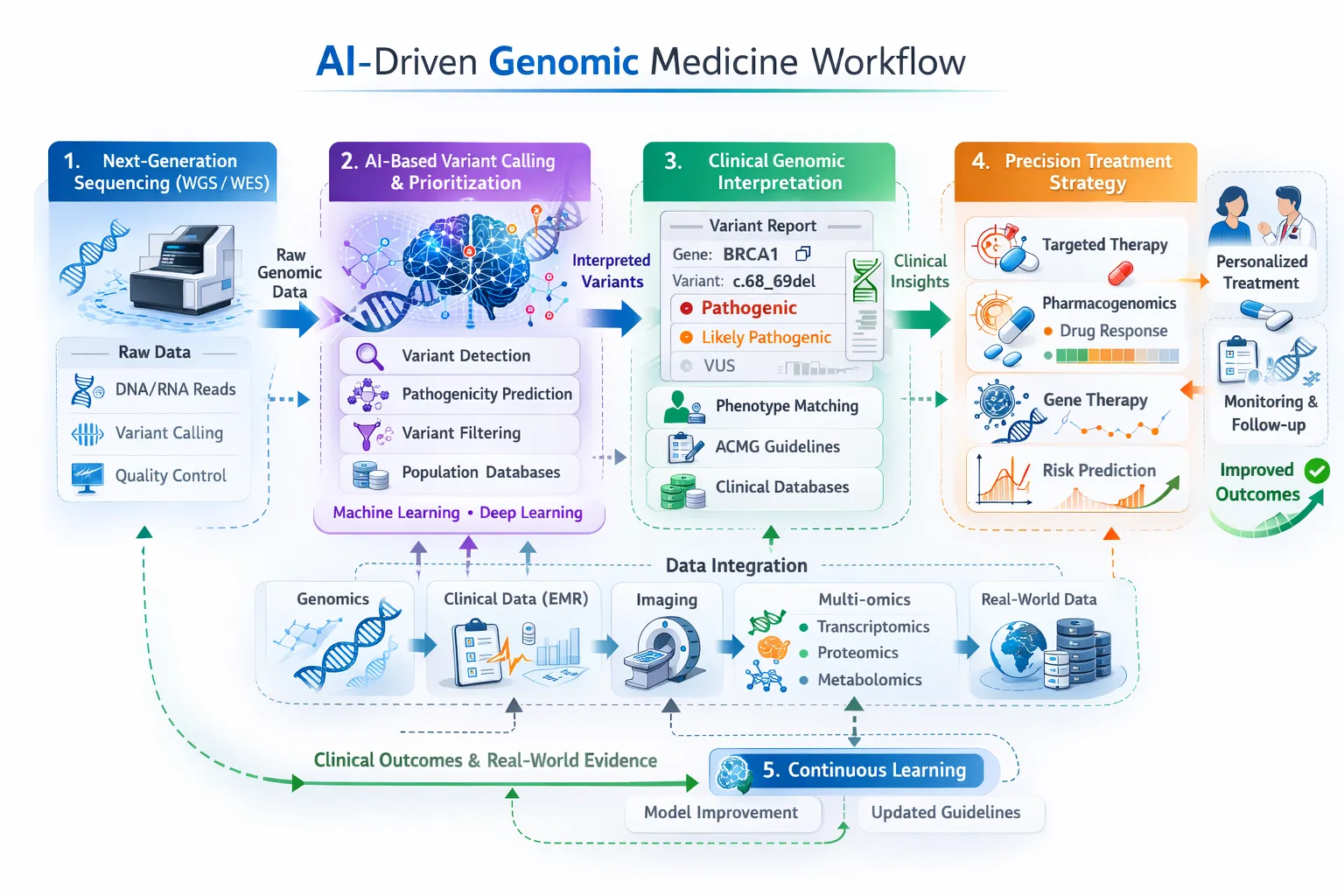
Artificial intelligence is transforming precision medicine by enabling the analysis of complex biomedical data—from molecular profiles to real-world clinical records.
This two-part series explores how AI methods are applied to individual data modalities and how these insights are combined through cross-modality integration to drive better clinical outcomes.
Whether you are a clinician, researcher, or healthcare innovator, this series provides a structured, accessible guide to one of the most important developments in modern medicine.
What You’ll Learn
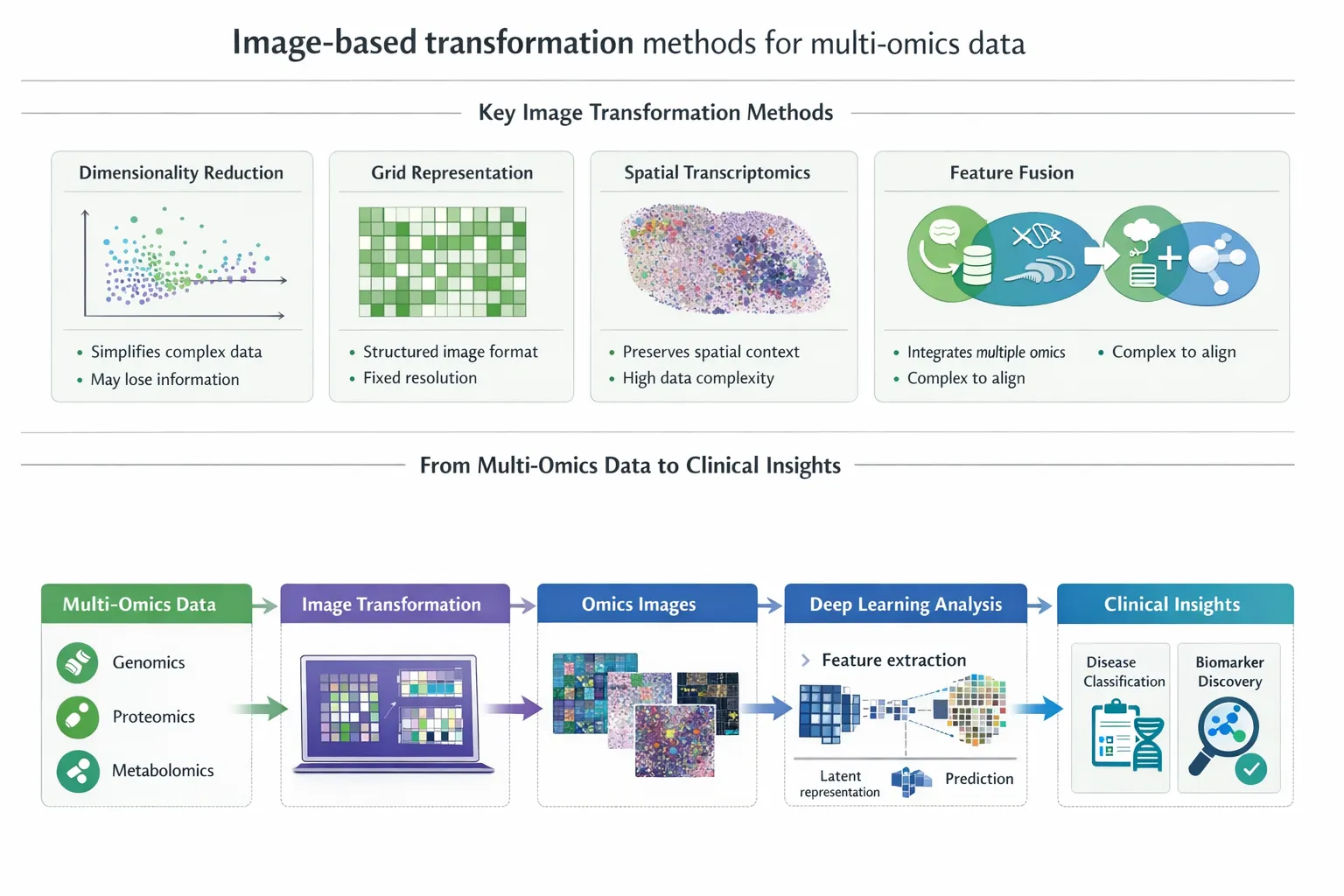
- How AI models analyse multi-omics data (genomics, transcriptomics, proteomics)
- How machine learning extracts insights from electronic health records (EHRs)
- Why modality-specific learning is essential before integration
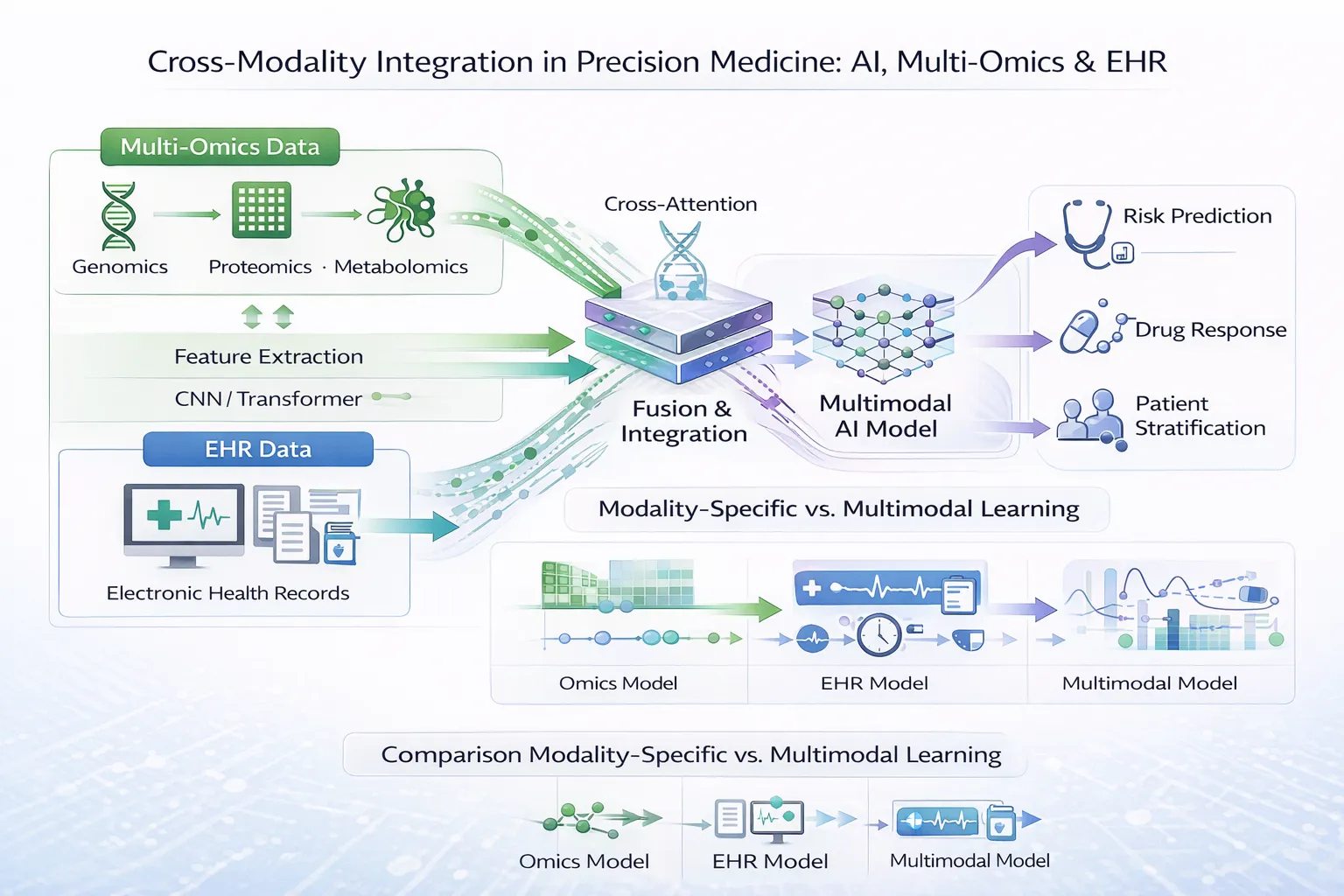
- How multimodal AI combines data sources for improved prediction and diagnosis
- The key challenges and opportunities in real-world clinical implementation
Part 1: Modality-Specific Learning
Modality-Specific Learning in Precision Medicine: From Multi-Omics to Electronic Health Records
Focus: Understanding how AI models are tailored to different biomedical data types
Key Themes
- Multi-omics data analysis and dimensionality challenges
- Representation learning using deep learning models
- Temporal modelling of EHR data using RNNs and transformers
- Clinical applications in cancer, rare disease, and risk prediction
Why It Matters
Before integrating datasets, it is essential to extract meaningful signals from each modality independently. This ensures robust, interpretable, and clinically relevant insights.
👉 Read Part 1 to understand the foundations of AI-driven precision medicine.
Part 2: Cross-Modality Integration
Cross-Modality Integration in Precision Medicine: Challenges and Opportunities
Focus: Combining molecular and clinical data for comprehensive insights
Key Themes
- Feature-level, representation-level, and decision-level integration
- Multimodal AI architectures (transformers, GNNs)
- Applications in oncology, rare disease diagnosis, and risk prediction
- Challenges in data heterogeneity, interpretability, and privacy
Why It Matters
True precision medicine emerges when molecular biology is linked with clinical outcomes—enabling more accurate diagnosis, prognosis, and treatment selection.
👉 Read Part 2 to explore the future of integrated, AI-driven healthcare.
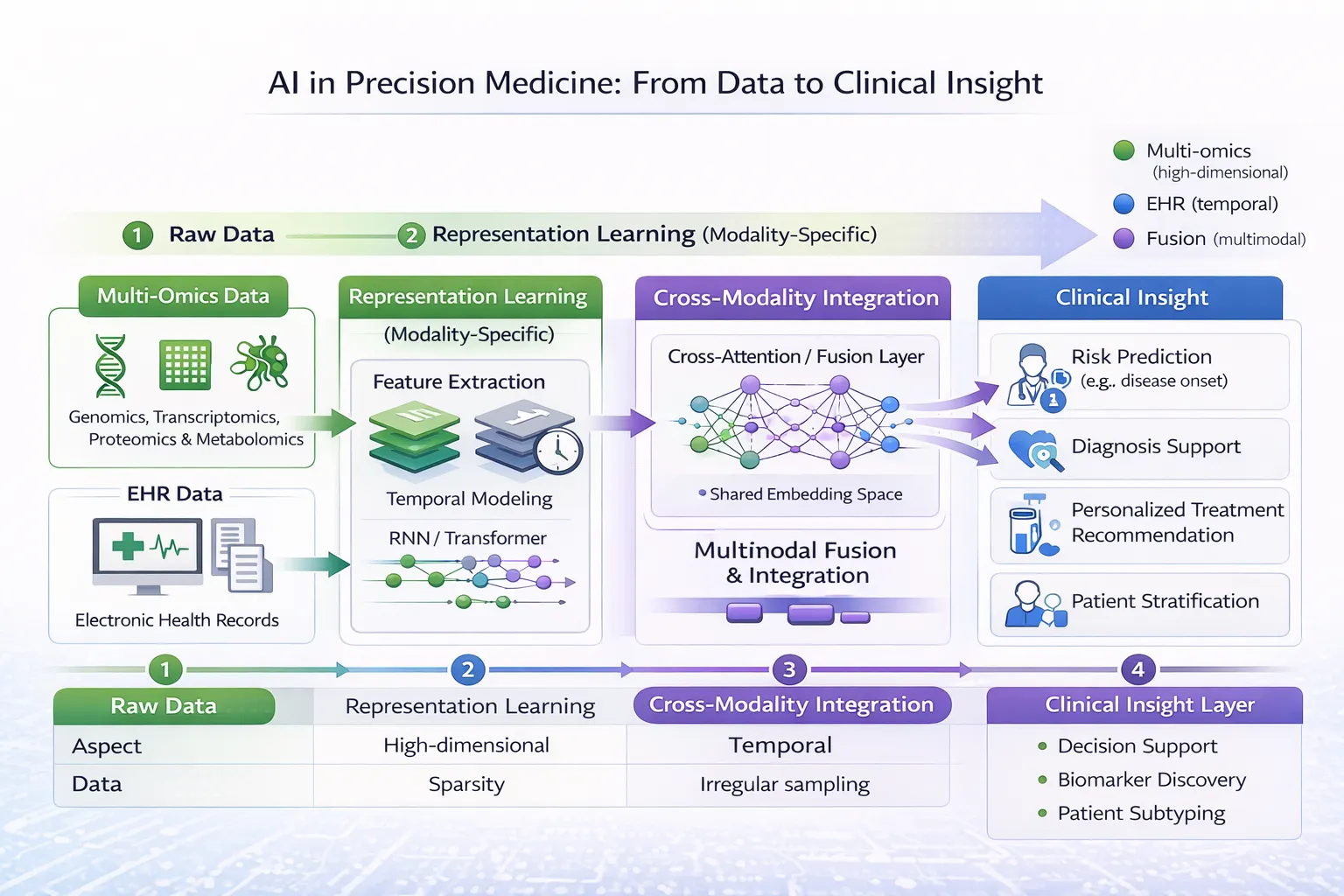
How the Two Articles Connect
Multi-Omics Data        EHR Data
       ↓                     ↓
Modality-Specific Learning (Part 1)
       ↓
Cross-Modality Integration (Part 2)
       ↓
Clinical Insight & Precision Medicine
This progression reflects the real-world pipeline:
- Understand each data type independently
- Integrate insights across modalities
- Apply findings to patient care
Clinical Relevance
Together, these approaches enable:
- Earlier and more accurate diagnosis
- Improved risk prediction and stratification
- Personalised treatment strategies
- Enhanced clinical decision support
For healthcare professionals, understanding both steps is essential for interpreting AI-driven tools and applying them safely in practice.
Who This Series Is For
- Clinicians exploring AI in practice
- Clinical researchers and translational scientists
- Bioinformaticians and data scientists
- Healthcare leaders implementing precision medicine
Looking Ahead
As healthcare continues to evolve, the integration of AI with multi-omics and clinical data will redefine how diseases are understood and treated.
This series provides a foundation, but the field is rapidly advancing toward:
- Real-time clinical decision support
- AI-guided treatment pathways
- Digital twins and predictive medicine
Start the Series
- Part 1: Modality-Specific Learning in Precision Medicine
- Part 2: Cross-Modality Integration in Precision Medicine
Explore More
You may also be interested in related topics on our site:
- How to integrate multi-omics data using deep learning
- Precision Medicine in Action: Your DNA, Your Treatment
- Multi-Omics Explained: From Genome to Phenotype
- Artificial Intelligence in Genomic Medicine
- Polygenic Risk Scores: Can Your DNA Predict Your Health?