Introduction
1. The Human Genome Project
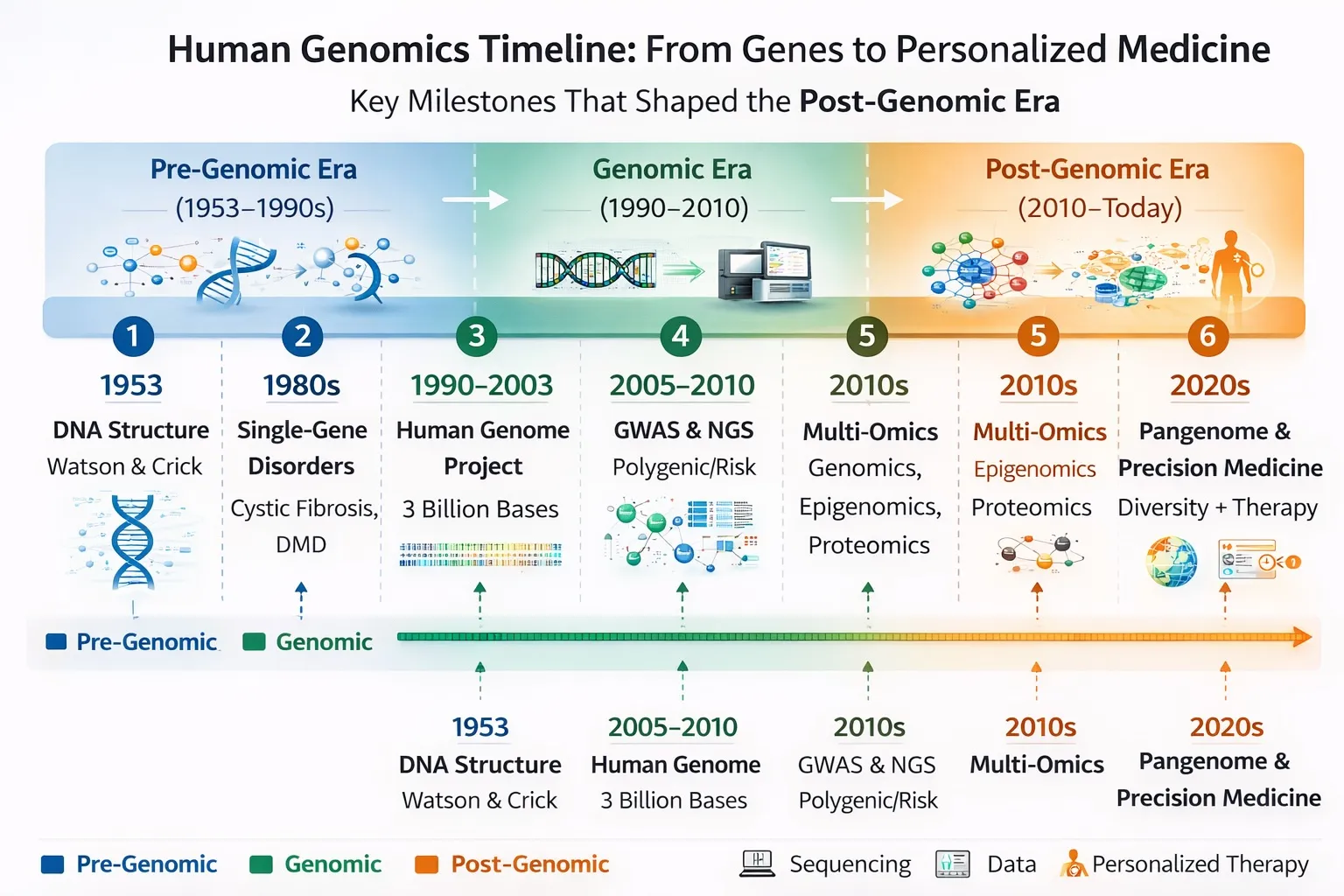
- What it was: The Human Genome Project was the first international effort to read the complete sequence of human DNA. Scientists mapped approximately three billion DNA letters and identified most human genes, producing a reference genome that researchers and clinicians still rely on today.
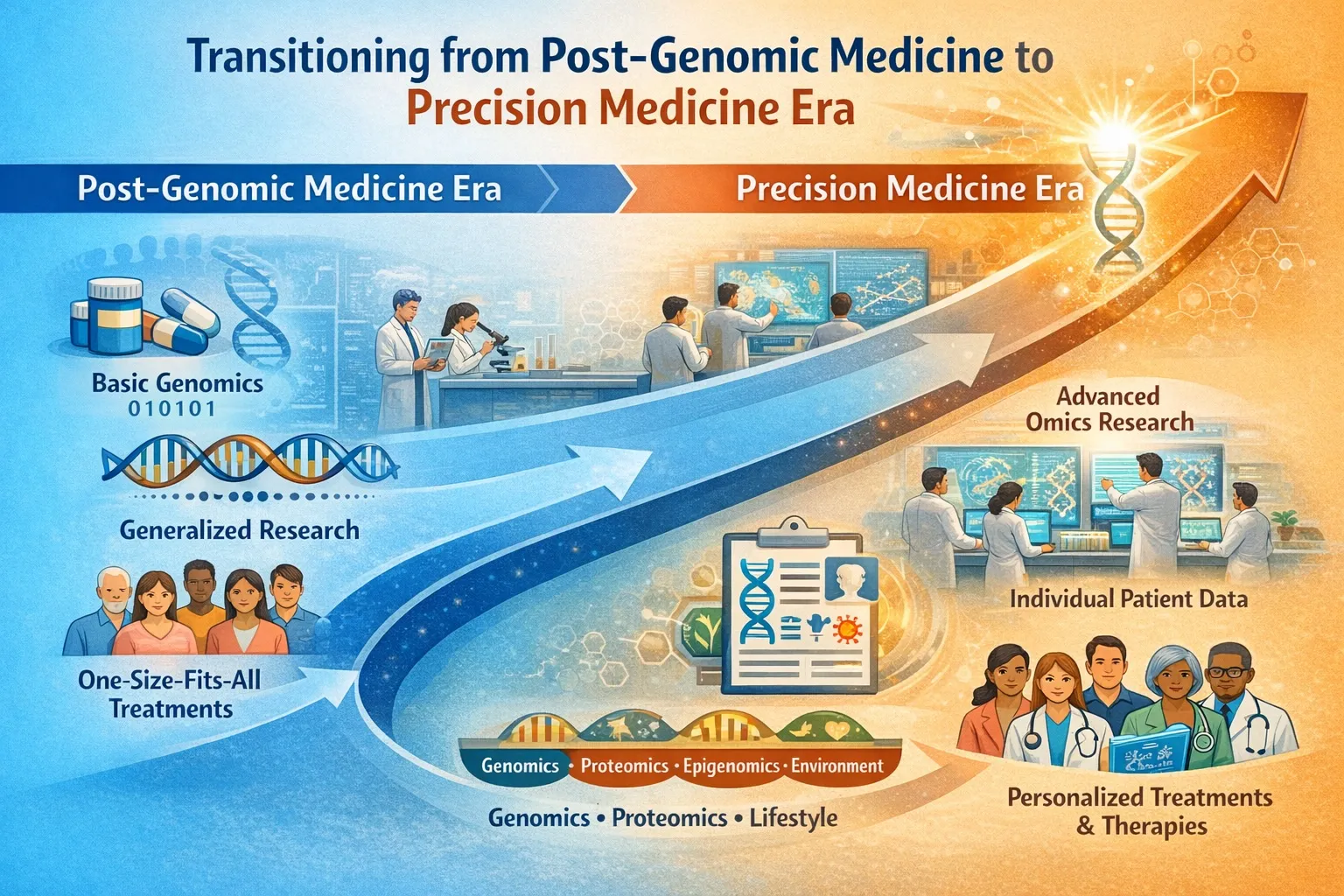
- Why it mattered: Before this project, genetics focused on individual genes linked to rare diseases. The genome project transformed biology into an information science, allowing researchers to study disease systematically rather than one gene at a time.
- Impact on medicine: The project made modern genetic testing possible. It enabled diagnosis of inherited conditions, carrier screening, and the discovery of disease‑associated genes. Importantly, it also revealed that human biology is far more complex than expected—genes alone rarely explain disease.
- What changed for patients: Patients gained access to genetic diagnoses that were previously impossible, especially for rare and inherited disorders.
2. Genome‑Wide Association Studies (GWAS)
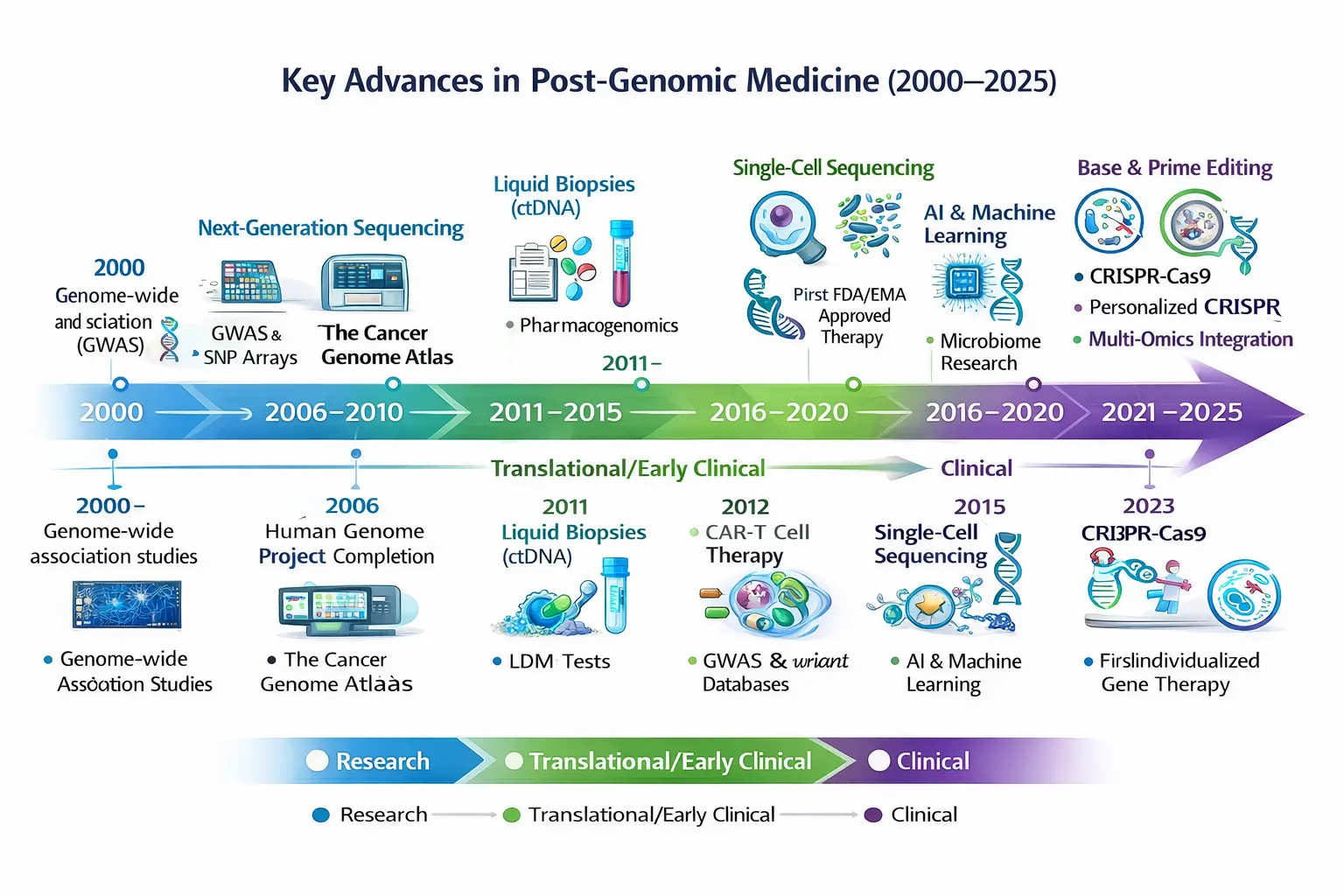
- What they are: GWAS examine the entire genome to identify genetic variants associated with common diseases such as diabetes, heart disease, and autoimmune conditions.
- Why they mattered: They showed that most common diseases are influenced by hundreds or thousands of variants, each contributing a small amount of risk. This overturned the idea that single genes explain most disease.
- Impact on medicine: GWAS shifted medicine toward risk prediction and population‑level understanding of disease rather than deterministic genetic explanations.
- What changed for patients: Disease risk began to be understood as a spectrum rather than a yes‑or‑no outcome.
3. Next‑Generation Sequencing (NGS)
- What it is: NGS technologies can read millions of DNA fragments simultaneously, making sequencing dramatically faster and cheaper.
- Why it mattered: Sequencing that once took years could now be done in days, enabling large‑scale research and clinical diagnostics.
- Impact on medicine: NGS underpins whole‑exome and whole‑genome sequencing used to diagnose rare diseases, guide cancer treatment, and track infectious outbreaks.
- What changed for patients: Patients with rare conditions could finally receive accurate genetic diagnoses after years of uncertainty.
4. Global Human Genetic Variation Mapping
- What it was: Large international projects catalogued genetic variation across populations worldwide.
- Why it mattered: They revealed that genetic variation differs across ancestries and that early genomic studies were heavily biased toward European populations.
- Impact on medicine: Improved accuracy in interpreting genetic test results and reduced misclassification of benign variants as disease‑causing.
- What changed for patients: More reliable genetic results, particularly for under‑represented populations.
5. The Cancer Genome Atlas (TCGA)
- What it was: A large‑scale effort to map the genetic changes driving different cancers.
- Why it mattered: It showed that cancers with similar appearances can have very different genetic causes.
- Impact on medicine: Led to molecular classification of cancer and targeted therapies based on tumour genetics.
- What changed for patients: Cancer treatment became more personalised and, in some cases, more effective.
6. Clinical Genome Sequencing at Scale
- What it was: The integration of genome sequencing into routine healthcare systems.
- Why it mattered: It demonstrated that genomics could be delivered safely and effectively at national scale.
- Impact on medicine: Established clinical pipelines for sequencing, interpretation, and result return.
- What changed for patients: Many families received long‑sought diagnoses, ending years of medical uncertainty.
7. The $1,000 Genome
- What it was: The point at which sequencing a human genome became affordable for widespread use.
- Why it mattered: Cost was the main barrier to genomic medicine adoption.
- Impact on medicine: Enabled population studies and preventive genomics.
- What changed for patients: Genetic testing became more accessible and scalable.
8. Polygenic Risk Scores
- What they areScores that combine many genetic variants to estimate disease risk.
- Why they mattered: They extended genomics from rare diseases to common conditions.
- Impact on medicine: Support early risk stratification and precision prevention strategies.
- What changed for patients: Some individuals can be identified as high‑risk long before symptoms appear.
9. CRISPR‑Based Gene Editing
- What it is: A precise method for editing DNA inside living cells.
- Why it mattered: It made genome editing simple, fast, and accessible.
- Impact on medicine: Enabled curative therapies for some inherited diseases and accelerated drug development.
- What changed for patients: Some genetic conditions can now be treated at their root cause.
10. The Human Pangenome Reference
- What it is: A new reference genome representing many ancestries instead of one.
- Why it mattered: The original reference did not reflect global human diversity.
- Impact on medicine: Improves variant interpretation accuracy and equity in genomic medicine.
- What changed for patients: More accurate and fair genetic results across diverse populations.