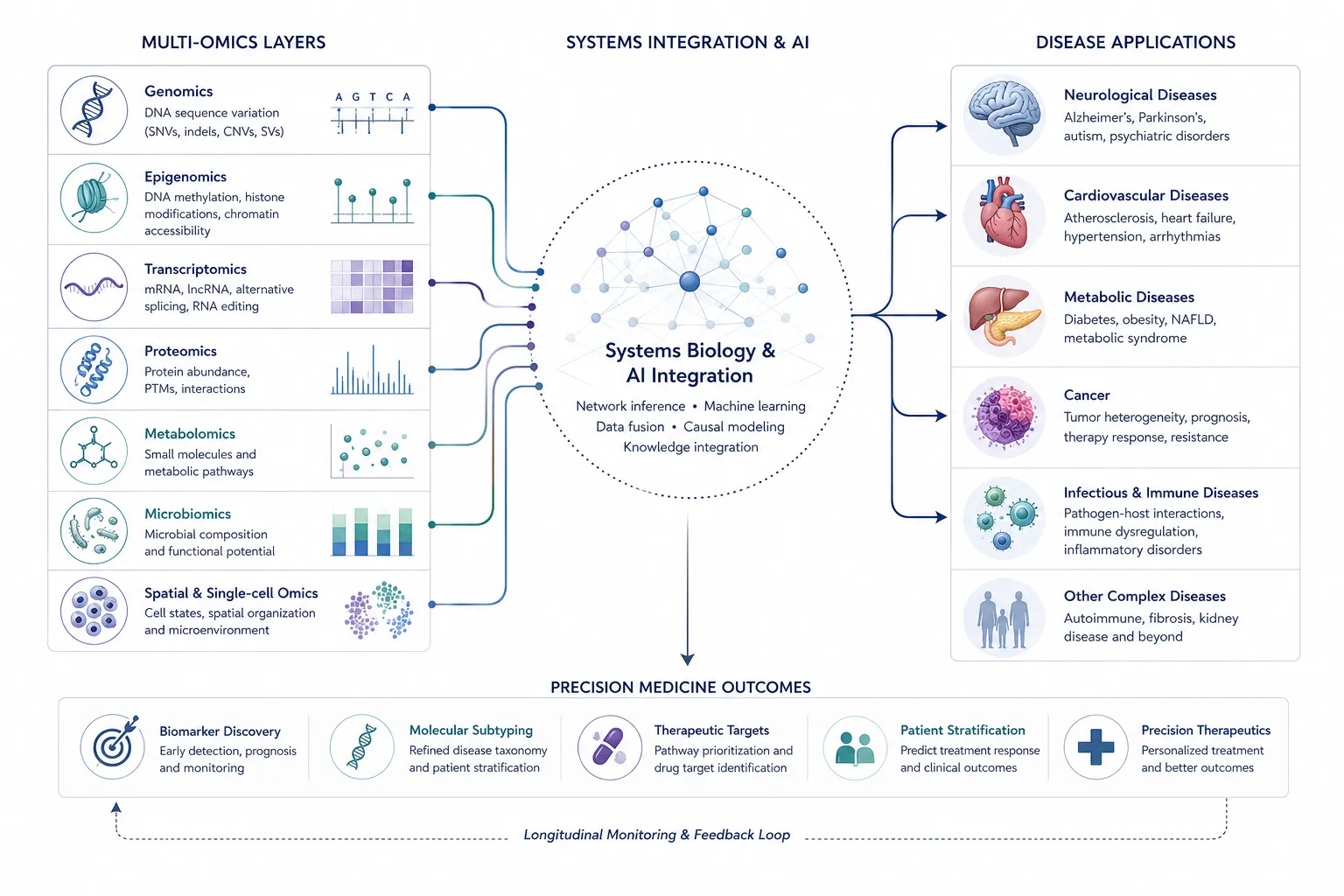
Introduction
Integrating genomics, epigenomics, transcriptomics, proteomics, metabolomics, and spatial biology to redefine precision medicine
The rapid evolution of high-throughput molecular technologies has transformed biomedical research from a reductionist discipline focused on isolated genes or pathways into a systems-level science capable of interrogating biological complexity across multiple molecular dimensions simultaneously. Human diseases are increasingly understood not as the consequence of single genetic abnormalities, but as dynamic and interconnected disturbances involving genomic variation, transcriptional regulation, epigenetic remodeling, protein signaling, metabolism, immune activity, and environmental interactions. As a result, modern disease biology now requires analytical frameworks capable of integrating these diverse molecular layers into coherent models of pathophysiology.
Multi-omics has emerged as one of the most important approaches in this transition toward systems medicine. Rather than analyzing genomic, transcriptomic, proteomic, or metabolomic data independently, multi-omics integrates these datasets to construct a more comprehensive understanding of cellular function and disease mechanisms. This integrated perspective enables researchers and clinicians to identify disease-driving pathways, characterize molecular heterogeneity, discover clinically actionable biomarkers, and uncover therapeutic vulnerabilities that are often invisible when individual omics layers are studied in isolation.
The Conceptual Foundation of Multi-omics
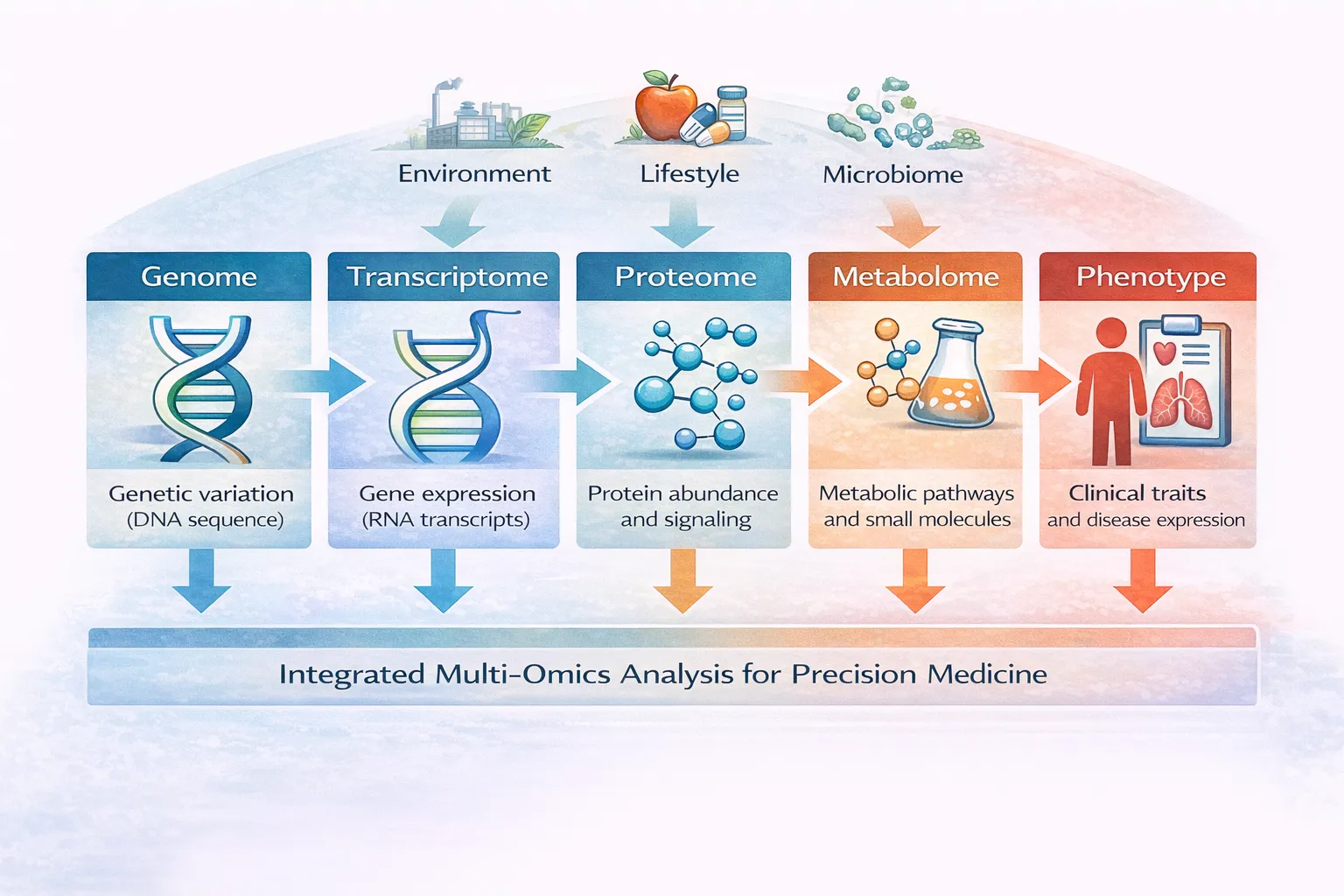
Biological systems operate through highly interconnected regulatory networks spanning multiple molecular layers. DNA sequence variation provides the inherited framework for cellular function, but disease phenotypes emerge through downstream regulatory cascades involving chromatin structure, RNA expression, protein signaling, cellular metabolism, and tissue-level interactions. Each molecular layer contributes complementary information about cellular state and disease progression.
Genomics provides insight into inherited and somatic DNA variation, including single nucleotide variants, insertions and deletions, copy-number alterations, and structural rearrangements. Genomic data are relatively stable and form the foundational blueprint for biological systems. However, genomic information alone frequently fails to explain why individuals with similar variants exhibit different clinical phenotypes or treatment responses.
Epigenomics captures regulatory modifications that influence gene expression without altering DNA sequence. DNA methylation, histone modifications, nucleosome positioning, and chromatin accessibility collectively determine whether genes are transcriptionally active or repressed. These epigenetic states are dynamic and responsive to environmental exposures, developmental signals, aging, inflammation, and disease progression.
Transcriptomics measures RNA expression and provides a functional readout of cellular activity. Messenger RNA abundance, alternative splicing patterns, non-coding RNA expression, and RNA editing collectively reflect how cells respond to internal and external stimuli. Transcriptomic profiling has become essential for understanding disease-associated cellular states, tissue heterogeneity, and therapeutic response.
Proteomics examines the protein landscape of cells and tissues, including protein abundance, signaling interactions, post-translational modifications, and enzyme activity. Since proteins perform most biological functions directly, proteomic data often correlate more closely with phenotype than genomic data alone. Proteomics also captures signaling dynamics that cannot be inferred solely from gene expression profiles.
Metabolomics characterizes the small molecules produced during cellular metabolism, including amino acids, lipids, carbohydrates, and signaling metabolites. Metabolic states reflect the integrated output of genomic regulation, environmental exposures, nutrition, microbiome interactions, and cellular physiology. Because metabolism changes rapidly in response to disease processes, metabolomics provides a particularly sensitive measure of physiological state.
No single omics layer is sufficient to explain the complexity of most human diseases. Multi-omics integration therefore attempts to reconstruct biological systems by linking these molecular dimensions into unified models of cellular regulation and disease pathogenesis.
Why Multi-omics Is Transforming Human Disease Research
Traditional biomedical research has often relied on studying isolated molecular components or pathways. Although this reductionist strategy has generated important discoveries, it frequently fails to capture the complexity and heterogeneity of human disease. Disorders such as cancer, diabetes, neurodegeneration, autoimmune disease, and cardiovascular disease arise through interactions among numerous molecular and environmental factors rather than through single pathogenic events.
Multi-omics approaches enable investigators to move beyond simple linear models of disease and instead reconstruct complex regulatory networks that connect genomic alterations to downstream cellular and physiological consequences. This systems-level perspective is particularly important for understanding diseases characterized by substantial heterogeneity, where patients with similar clinical presentations may possess fundamentally different molecular mechanisms.
The article highlights that integrated multi-omics analyses are increasingly being used to redefine disease classification. Historically, diseases were grouped according to symptoms, organ systems, or histopathological features. Multi-omics now enables classification based on molecular signatures, pathway activation states, immune microenvironments, and regulatory network architecture. These molecular taxonomies frequently provide greater predictive value for prognosis and therapeutic response than traditional clinical classifications.
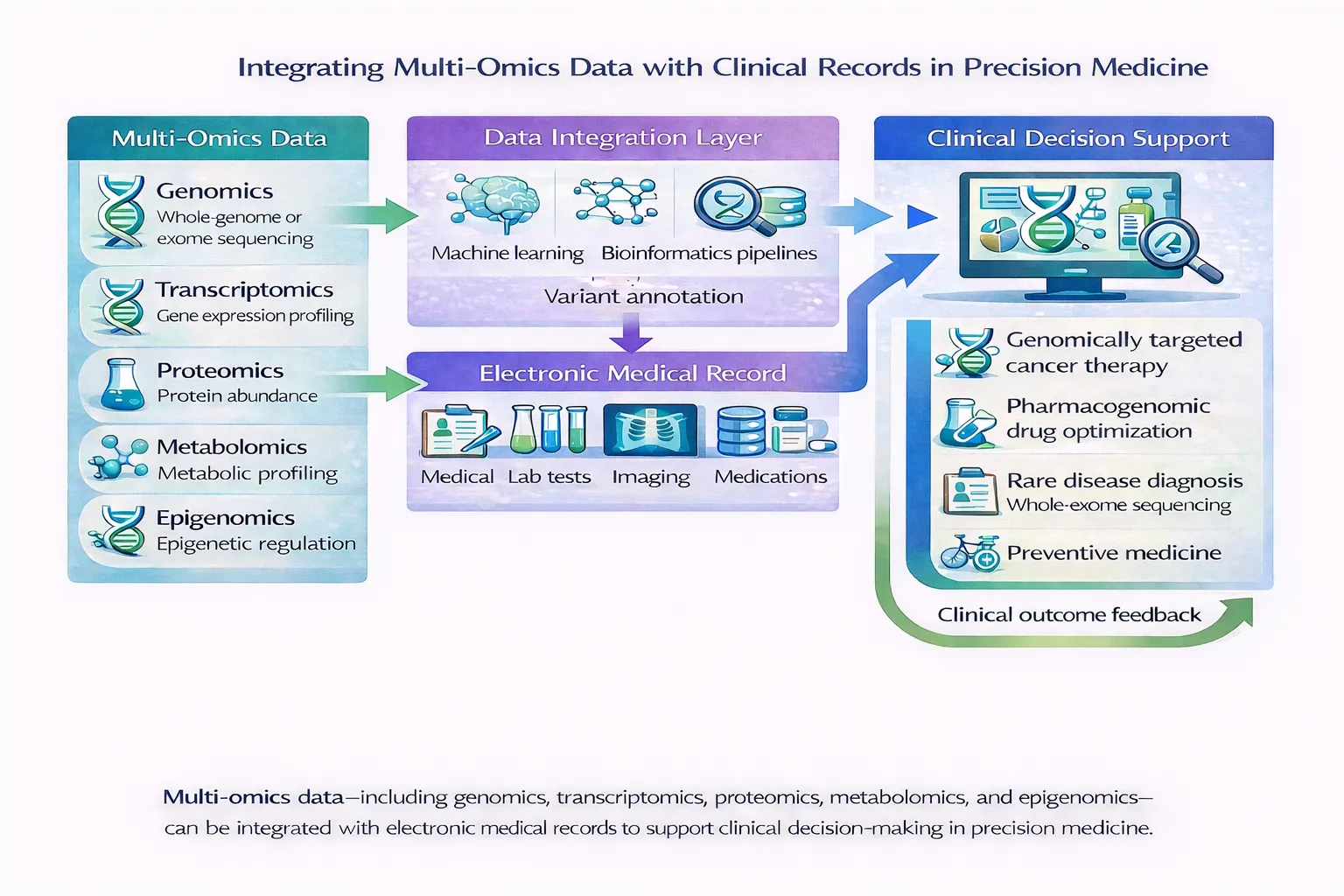
The growing importance of precision medicine has further accelerated interest in multi-omics technologies. Precision medicine requires accurate characterization of disease mechanisms within individual patients. Because disease biology often spans multiple regulatory layers simultaneously, integrated molecular profiling is becoming increasingly necessary for biomarker discovery, patient stratification, and therapeutic selection.
Core Workflow of Multi-omics Studies
Multi-omics studies are highly interdisciplinary workflows requiring integration of experimental biology, computational analysis, clinical medicine, and systems biology. Each stage of the workflow significantly influences the quality and interpretability of downstream analyses.
The process begins with study design and bio-specimen collection. Researchers must carefully select tissue sources, sampling strategies, cohort composition, and molecular assays while minimizing technical variability. Because different omics platforms often require distinct preservation and preparation methods, coordinated sample processing becomes critically important. Variability introduced during tissue handling or sequencing can obscure biological signals and introduce confounding batch effects.
Following sample acquisition, high-throughput technologies are used to generate molecular datasets. Next-generation sequencing platforms support genomic, transcriptomic, epigenomic, and single-cell analyses, while mass spectrometry technologies dominate proteomics and metabolomics workflows. Spatial transcriptomics and imaging-based omics technologies are increasingly incorporated to preserve tissue architecture and cellular context.
The resulting datasets are extraordinarily complex and heterogeneous. Before integration can occur, extensive preprocessing is required, including quality control, sequence alignment, feature extraction, normalization, missing-data correction, and batch-effect adjustment. The publication emphasizes that preprocessing choices can substantially influence biological interpretation and reproducibility.
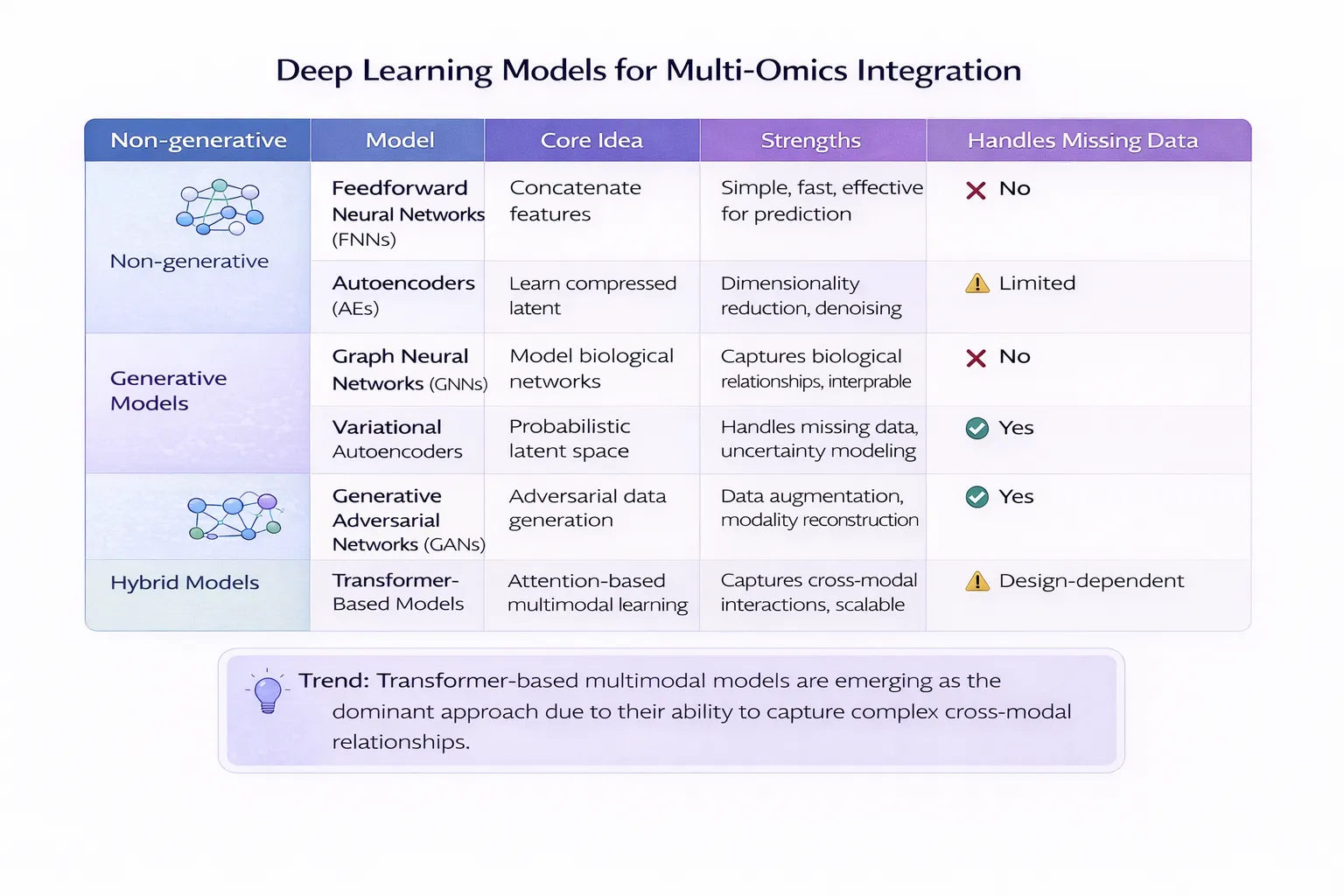
Data integration represents one of the most technically demanding stages of multi-omics research. Different omics layers possess distinct dimensionality, noise characteristics, dynamic ranges, and sparsity patterns. Computational methods such as network analysis, Bayesian inference, matrix factorization, graph-based learning, and deep neural networks are increasingly used to identify coordinated molecular patterns across datasets.
Ultimately, integrated analyses aim to reconstruct disease-associated regulatory networks, identify molecular subtypes, infer pathway interactions, and generate clinically meaningful insights that can inform diagnosis, prognosis, or therapeutic intervention.
Computational and Analytical Challenges
Although multi-omics technologies have advanced rapidly, computational integration remains a major bottleneck in the field. One of the central challenges is the enormous dimensionality of omics datasets. A single study may include millions of genomic variants, tens of thousands of transcripts, large protein interaction networks, and extensive metabolite panels, while the number of patients remains comparatively small. This imbalance creates substantial statistical challenges and increases the risk of overfitting.
Data heterogeneity further complicates integration. Different omics layers are generated using distinct technologies with varying sensitivity, noise profiles, and resolution. Genomic data are relatively stable, whereas transcriptomic and metabolomic states may fluctuate rapidly in response to environmental or physiological changes. Combining these disparate datasets into coherent analytical frameworks remains computationally difficult.
The article also highlights the challenge of missing data. Clinical studies frequently lack complete multi-omics coverage for every patient because of cost, tissue availability, or technical limitations. Missing information complicates statistical modeling and reduces integration performance.
Interpretability represents another major limitation, particularly as deep learning and artificial intelligence methods become increasingly common. Although complex machine learning models can identify subtle nonlinear relationships across omics layers, they often function as “black boxes” that are difficult to interpret biologically or clinically. There is a growing importance of explainable AI frameworks capable of providing mechanistic insights alongside predictive performance.
Multi-omics in Cancer Biology and Precision Oncology
Cancer has become one of the most important applications of multi-omics technologies because tumor biology involves coordinated dysregulation across multiple molecular layers simultaneously. Tumorigenesis is driven not only by DNA mutations, but also by epigenetic remodeling, altered transcriptional programs, aberrant signaling pathways, metabolic reprogramming, and interactions with the tumor microenvironment.
Large-scale initiatives such as The Cancer Genome Atlas demonstrated how integrated analyses of genomics, transcriptomics, epigenomics, and proteomics could redefine tumor classification. These studies revealed that cancers previously grouped together histologically often possess fundamentally distinct molecular architectures with different prognostic and therapeutic implications.
More recently, multi-omics approaches have improved molecular subtyping across numerous malignancies, enabling more accurate prediction of treatment response, metastatic potential, and survival outcomes. Integrated molecular profiling can identify actionable driver mutations, pathway activation states, resistance mechanisms, and immunological features relevant to targeted therapies and immunotherapy.
Multi-omics has also accelerated biomarker discovery in oncology. Rather than relying on isolated biomarkers, integrated molecular signatures incorporating multiple omics layers frequently provide greater robustness and predictive accuracy. This is particularly important for precision oncology, where therapeutic decisions increasingly depend on detailed characterization of tumor biology.
Multi-omics in Neurological and Neurodegenerative Disease
Neurological disorders represent some of the most biologically complex diseases in medicine. Conditions such as Alzheimer disease, Parkinson disease, autism spectrum disorders, and psychiatric illnesses involve intricate interactions among genetics, epigenetics, inflammation, metabolism, and environmental exposures.
Mmulti-omics approaches are also helping researchers dissect the molecular heterogeneity underlying neurodegeneration and brain dysfunction. Integrated analyses have identified dysregulated inflammatory pathways, mitochondrial dysfunction, altered lipid metabolism, and disease-associated transcriptional programs that contribute to neuronal injury and synaptic dysfunction.
Single-cell and spatial multi-omics technologies are particularly important in neuroscience because the brain contains highly specialized and heterogeneous cellular populations. Bulk tissue analyses often obscure important disease-associated cellular states. Single-cell approaches now enable characterization of neuron-specific, glial-specific, and immune-specific molecular changes within diseased brain tissue.
The article emphasizes that these technologies are providing unprecedented insight into neuroinflammatory processes, neuronal vulnerability, and disease progression, potentially enabling earlier diagnosis and more targeted therapeutic strategies.
Cardiovascular and Metabolic Disease Applications
Cardiovascular disease and metabolic disorders arise through complex interactions among inherited susceptibility, environmental exposures, inflammation, metabolism, and lifestyle factors. Multi-omics approaches are increasingly being used to dissect these interactions and identify molecular pathways contributing to disease progression.
In cardiovascular research, integrated analyses have been applied to atherosclerosis, hypertension, arrhythmias, and heart failure. By combining genomics, transcriptomics, proteomics, and metabolomics, researchers can identify signaling pathways associated with vascular inflammation, lipid metabolism, myocardial remodeling, and cardiac dysfunction.
Metabolic diseases such as obesity and type 2 diabetes are similarly well suited for multi-omics investigation because they involve systemic alterations in metabolism, immune regulation, endocrine signaling, and microbiome composition. Integrated metabolomic and microbiome analyses have revealed important links between gut microbial communities, inflammatory signaling, insulin resistance, and lipid dysregulation.
These findings may eventually support more individualized treatment strategies by identifying patient-specific molecular drivers of metabolic disease.
Infectious Disease and Immune System Profiling
Multi-omics technologies have become increasingly important in infectious disease research, particularly during the COVID-19 pandemic. Integrated molecular profiling enabled researchers to characterize host immune responses, inflammatory pathways, metabolic remodeling, and pathogen evolution at unprecedented resolution.
Multi-omics analyses can identify biomarkers associated with disease severity, immune dysregulation, and therapeutic response. Such approaches are particularly valuable for understanding heterogeneous infectious diseases where patient outcomes vary substantially despite similar pathogen exposure.
Immune profiling through integrated transcriptomics, proteomics, metabolomics, and single-cell technologies is also improving understanding of host-pathogen interactions and immune-mediated tissue injury.
The Emergence of Single-Cell and Spatial Multi-omics
One of the most transformative developments is the emergence of single-cell and spatial multi-omics technologies. Traditional bulk analyses average molecular signals across large cellular populations, potentially masking rare but clinically important cell states.
Single-cell multi-omics enables simultaneous characterization of chromatin accessibility, DNA methylation, RNA expression, and protein abundance within individual cells. These technologies are revolutionizing understanding of cellular heterogeneity, developmental trajectories, immune responses, and tumor microenvironments.
Spatial multi-omics adds an additional dimension by preserving tissue architecture during molecular profiling. This enables investigators to map how cells interact within complex tissue environments and identify localized signaling networks, immune niches, and microenvironmental gradients.
The integration of spatial biology with single-cell technologies is increasingly viewed as a major frontier in precision medicine and systems biology.
Artificial Intelligence and the Future of Multi-omics
Artificial intelligence is becoming central to modern multi-omics research because of the extraordinary complexity of integrated molecular datasets. Machine learning and deep learning algorithms can identify patterns and relationships that are difficult to detect using conventional statistical approaches.
The publication discusses how AI is increasingly being used for disease classification, biomarker discovery, network inference, patient stratification, and therapeutic prediction. Deep learning models are particularly valuable for integrating heterogeneous data modalities, including molecular profiles, imaging, clinical records, and longitudinal patient data.
However, there are important concerns regarding reproducibility, interpretability, and model generalizability. Clinical implementation will require robust validation frameworks, transparent modeling strategies, and careful attention to data quality and bias.
Comparative Table of Major Multi-omics Layers
| Omics Layer | Primary Target | Key Technologies | Clinical Applications |
|---|---|---|---|
| Genomics | DNA sequence variation | WGS, WES, SNP arrays | Rare disease, cancer genetics |
| Epigenomics | Regulatory modifications | ATAC-seq, methylation sequencing | Cancer, developmental disorders |
| Transcriptomics | RNA expression | RNA-seq, scRNA-seq | Disease classification |
| Proteomics | Protein abundance/signaling | Mass spectrometry | Biomarker discovery |
| Metabolomics | Small molecules/metabolism | LC-MS, GC-MS | Metabolic disease |
| Microbiomics | Microbial communities | 16S rRNA, metagenomics | Immune and inflammatory disease |
| Spatial Omics | Tissue organization | Spatial transcriptomics | Tumor microenvironment |
| Single-cell Multi-omics | Multi-layer cellular states | scMultiome platforms | Precision medicine |
Clinical Translation and Future Directions
Despite remarkable technological progress, routine clinical implementation of multi-omics remains limited by cost, infrastructure requirements, computational complexity, and lack of standardization. Clinical translation also requires large-scale validation studies demonstrating reproducibility and clinical utility across diverse populations.
Nevertheless, the future of precision medicine will likely depend heavily on integrated multi-omics approaches. Longitudinal molecular profiling may eventually enable continuous monitoring of disease progression, therapeutic response, and relapse. Integration with electronic health records, wearable sensors, imaging systems, and AI-driven clinical decision support platforms may further expand the role of multi-omics in routine healthcare.
The continued evolution of single-cell technologies, spatial biology, high-throughput sequencing, and computational modeling is expected to drive increasingly sophisticated systems-level understanding of human disease. As these technologies mature, multi-omics is likely to become a foundational framework for next-generation biomedical research and precision medicine.
Conclusion
Multi-omics represents a major conceptual and technological shift in biomedical science. Rather than studying isolated molecular components, researchers can now investigate disease as an integrated systems-level process involving coordinated interactions across genomic, epigenomic, transcriptomic, proteomic, metabolomic, and spatial dimensions.
In this article we explore how these approaches are transforming understanding of cancer, neurodegeneration, cardiovascular disease, metabolic disorders, infectious disease, and immune regulation. By enabling more comprehensive characterization of disease mechanisms, multi-omics is redefining disease classification, biomarker discovery, and precision therapeutics.
Although substantial challenges remain in data integration, computational interpretation, scalability, and clinical implementation, multi-omics technologies are rapidly reshaping the future of medicine. The convergence of molecular profiling, single-cell biology, spatial omics, and artificial intelligence is moving healthcare toward a more predictive, personalized, and mechanistically informed era of precision medicine.
Explore related insights
- Integrating Genomics into Multimodal EHR Foundation Models
- AI for Multi-Omics and EHR Data: Modality-Specific Learning
- What is Single-Cell Multi-omics? Explainer - Technologies, Workflow & Use Cases
- Deep Learning for Multi-Omics Data Integration