Introduction
Over the past two decades, advances in genomic sequencing have transformed our understanding of how genetics influences health and disease. While some conditions are caused by mutations in a single gene, most common diseases—such as heart disease, diabetes, and many cancers—are influenced by the combined effects of hundreds or even thousands of genetic variants.
Polygenic Risk Scores (PRS) are emerging as a powerful tool that aggregates these small genetic effects to estimate an individual’s inherited risk of developing certain diseases. By analyzing patterns across the genome, PRS can provide insights into disease susceptibility long before symptoms appear, potentially enabling earlier prevention, screening, and personalized healthcare strategies.
But how do polygenic risk scores work, and what can they realistically tell us about our future health?
What Is a Polygenic Risk Score?
A polygenic risk score is a statistical estimate of an individual’s genetic predisposition to a specific disease or trait. Instead of focusing on a single gene mutation, PRS examines many genetic variants across the genome, each contributing a small effect.
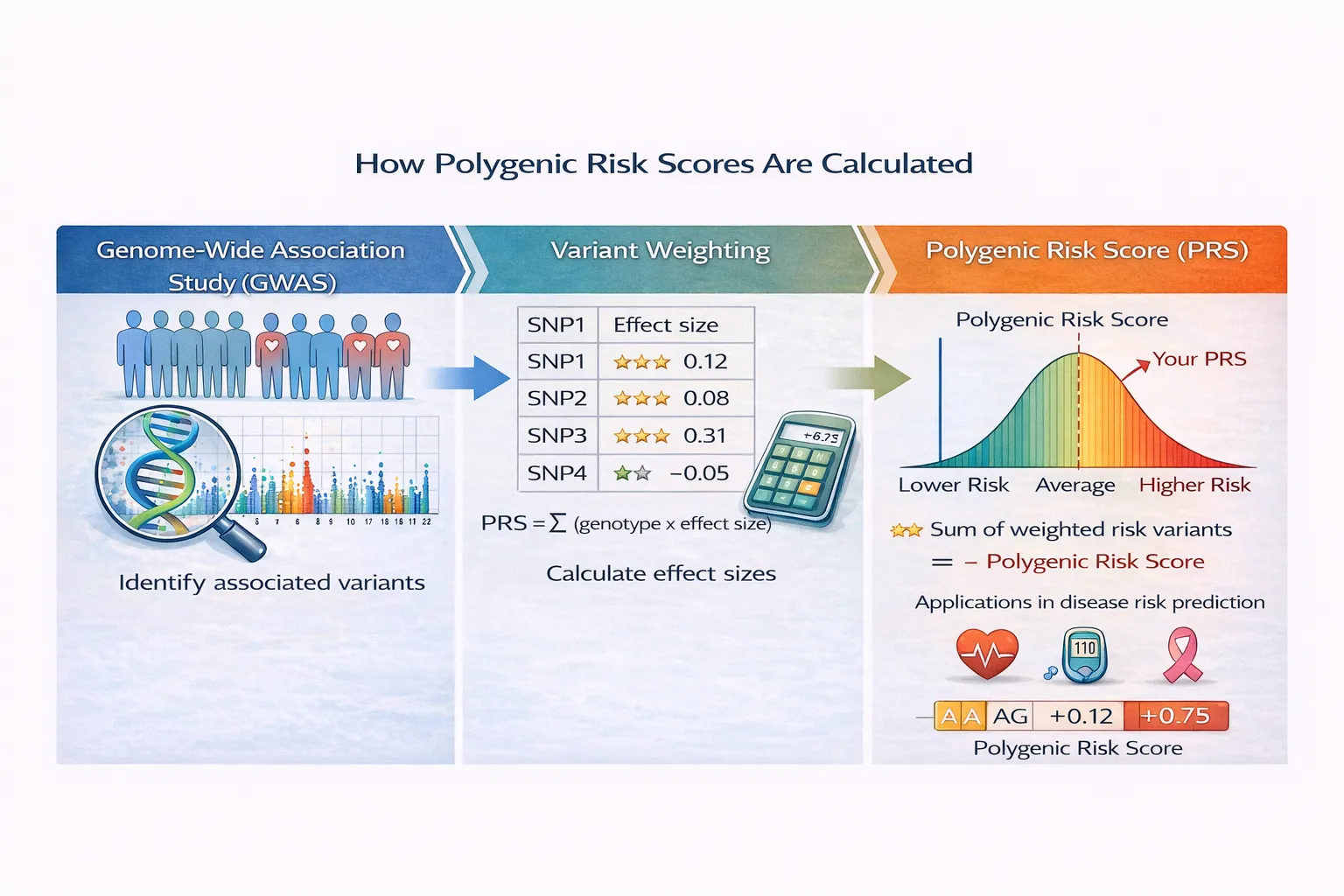
Researchers identify these variants through large studies known as genome-wide association studies (GWAS), which compare the genomes of thousands or even millions of individuals to identify genetic patterns associated with particular diseases.
Each relevant genetic variant is assigned a weight based on how strongly it influences disease risk. These weighted variants are then combined into a single score representing an individual’s overall inherited susceptibility.
In simple terms, a polygenic risk score asks:
How does your combination of genetic variants compare with others who develop a particular disease?
The result is typically expressed as relative risk compared with the general population.
How Polygenic Risk Scores Are Calculated
The process of generating a polygenic risk score involves several steps:
Genome sequencing or genotyping A person’s DNA is analyzed to identify millions of genetic variants across the genome.
Variant selection from GWAS studies Researchers determine which variants are associated with specific diseases.
Weighting genetic variants Each variant is assigned a numerical value reflecting its impact on disease risk.
Score aggregation These weighted effects are summed to produce an overall risk score.
Modern PRS models may incorporate thousands to millions of variants, reflecting the complex genetic architecture of common diseases.
Diseases Where Polygenic Risk Scores Are Being Used
Polygenic risk scores are being actively studied across a wide range of conditions, particularly those influenced by many genes.
Cardiovascular Disease
Heart disease is one of the most extensively studied areas for PRS.
Individuals in the highest polygenic risk categories may have two to four times greater risk of coronary artery disease compared with the general population.
This information could help guide:
- earlier cholesterol monitoring
- lifestyle interventions
- preventive medications such as statins
For example, a person with high genetic risk but normal cholesterol levels today may still benefit from earlier preventive strategies.
Type 2 Diabetes
Type 2 diabetes is influenced by both genetic and environmental factors.
Polygenic risk scores can help identify individuals with elevated inherited risk, potentially allowing:
- earlier glucose screening
- targeted lifestyle interventions
- more proactive metabolic monitoring
Importantly, research shows that lifestyle changes can substantially reduce risk even among individuals with high genetic susceptibility.
Breast Cancer
Polygenic risk scores are increasingly being explored to improve breast cancer screening strategies.
Women with high polygenic risk may benefit from:
- earlier screening
- more frequent mammography
- additional imaging such as MRI
PRS may complement existing genetic testing for high-risk mutations such as BRCA1 and BRCA2, which account for only a small proportion of breast cancer cases.
Mental Health Disorders
Research is also exploring polygenic risk scores for psychiatric conditions such as:
- schizophrenia
- bipolar disorder
- depression
Although still primarily used in research settings, PRS may eventually help improve understanding of individual vulnerability and guide early intervention strategies.
Polygenic Risk Scores in Precision Medicine
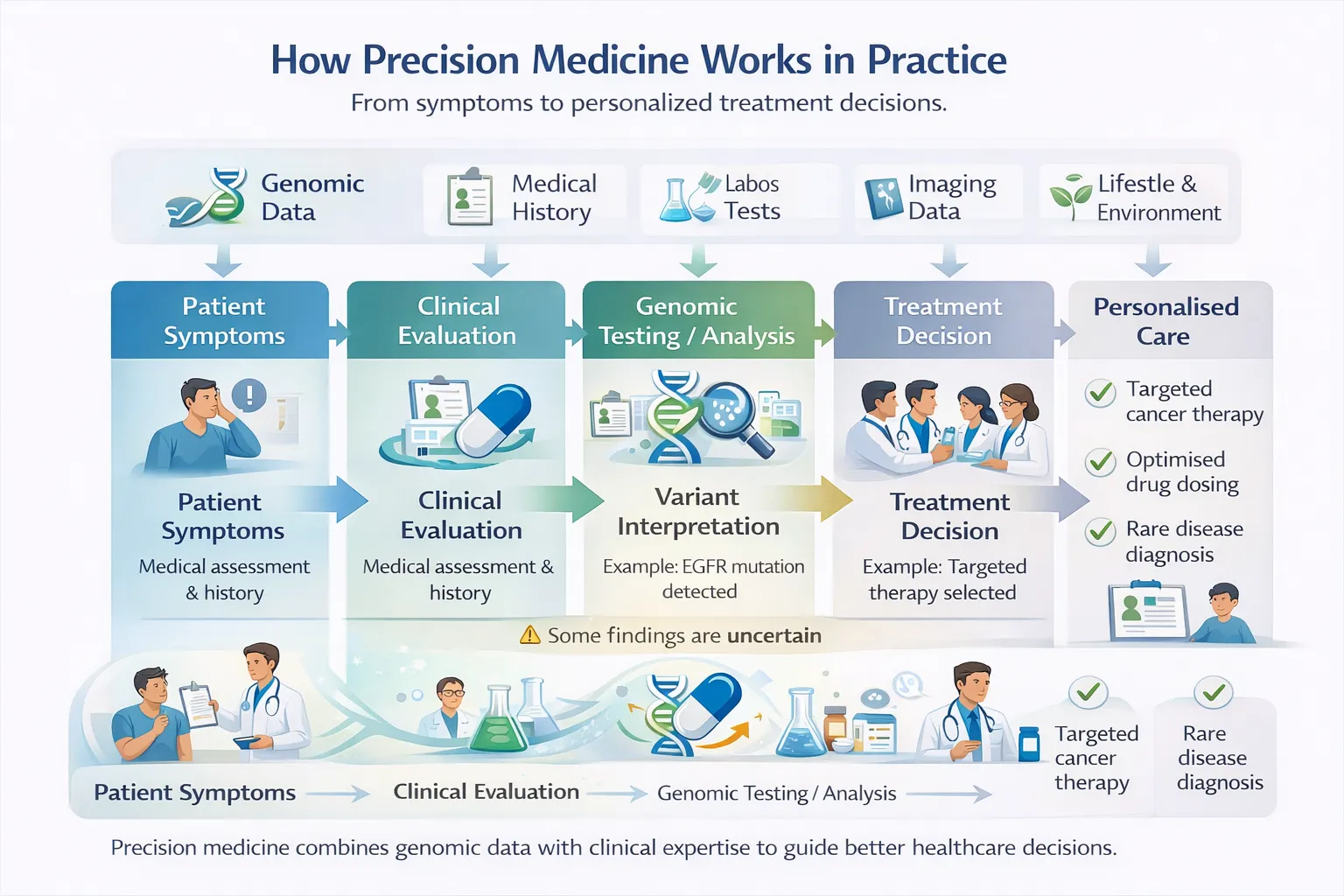
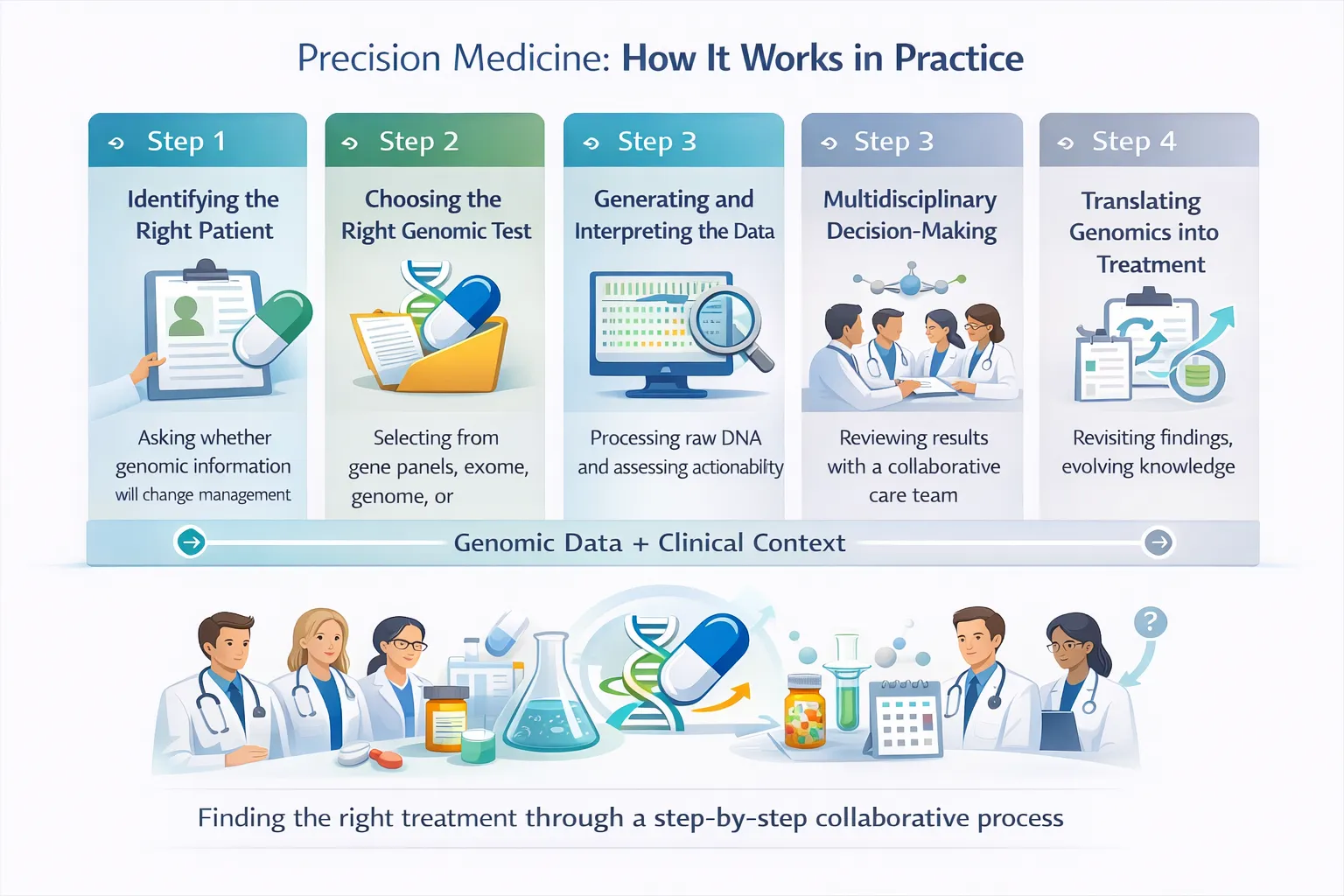
Polygenic risk scores represent a key component of precision medicine, an approach that tailors prevention and treatment strategies to the individual characteristics of each patient.
When combined with other health information—such as clinical history, lifestyle factors, and environmental exposures—PRS can contribute to a more comprehensive understanding of disease risk.
Potential clinical applications include:
- identifying individuals who may benefit from earlier screening programs
- guiding preventive therapies
- improving risk stratification in clinical trials
- informing population health strategies
In the future, polygenic risk scores may become part of routine health assessments alongside traditional biomarkers.
Limitations and Challenges
Despite their promise, polygenic risk scores still face several important challenges.
Predictive Accuracy
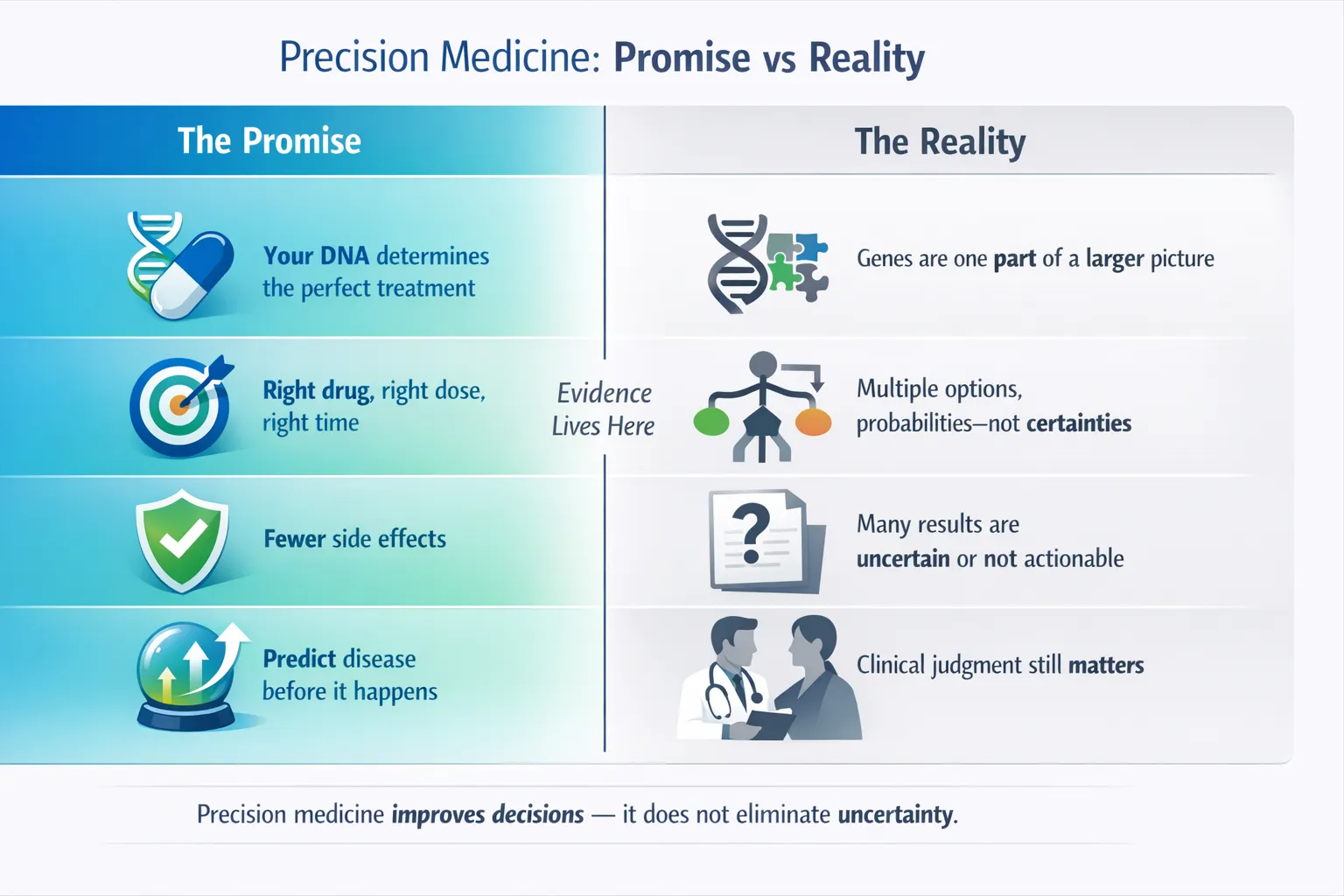
While PRS can stratify risk at a population level, they do not provide definitive predictions for individuals. A high genetic risk does not guarantee disease development, and a low score does not ensure protection.
Population Diversity
Many genetic studies used to develop PRS have historically focused on populations of European ancestry. This can reduce predictive accuracy in other populations, highlighting the need for more diverse genomic research.
Environmental and Lifestyle Factors
Genes are only part of the story. Diet, exercise, socioeconomic factors, and environmental exposures can strongly influence disease risk.
For example, individuals with high genetic risk for heart disease may dramatically reduce their risk through healthy lifestyle choices.
The Future of Polygenic Risk Scores
As genomic datasets continue to expand and analytical methods improve, polygenic risk scores are expected to become more accurate and clinically useful.
Future developments may include:
- integration with multi-omics data such as transcriptomics and metabolomics
- incorporation into electronic health records
- AI-driven risk prediction models combining genetics with clinical data
- population-level screening programs for early disease prevention
Ultimately, polygenic risk scores represent an important step toward a healthcare system that focuses not only on treating disease—but on predicting and preventing it.
Key Takeaway
Your DNA contains valuable clues about your health, but it is not destiny.
Polygenic risk scores provide a way to interpret the subtle genetic signals that influence disease risk, helping researchers and clinicians move closer to a future where healthcare is more proactive, personalized, and precise.