Introduction
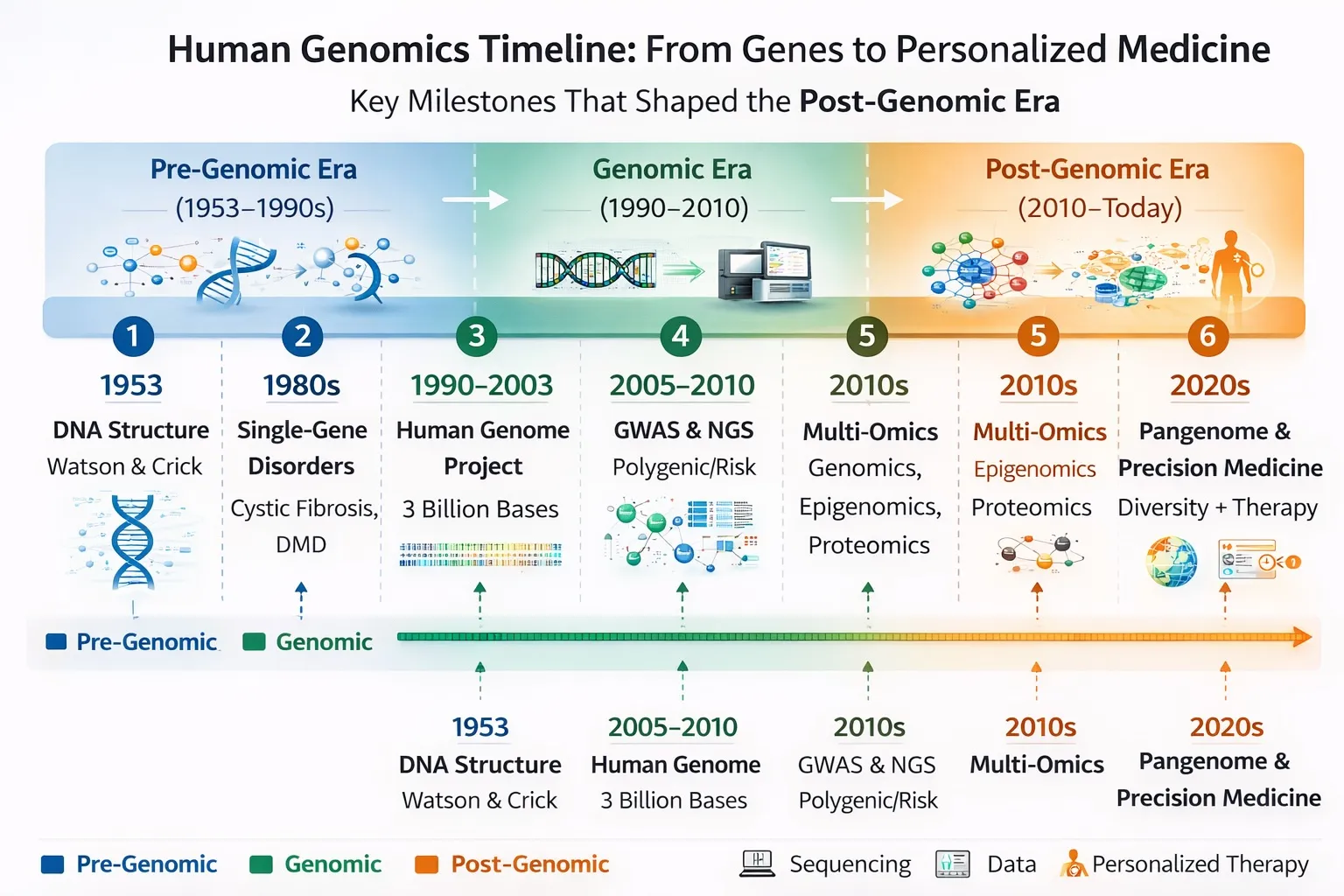
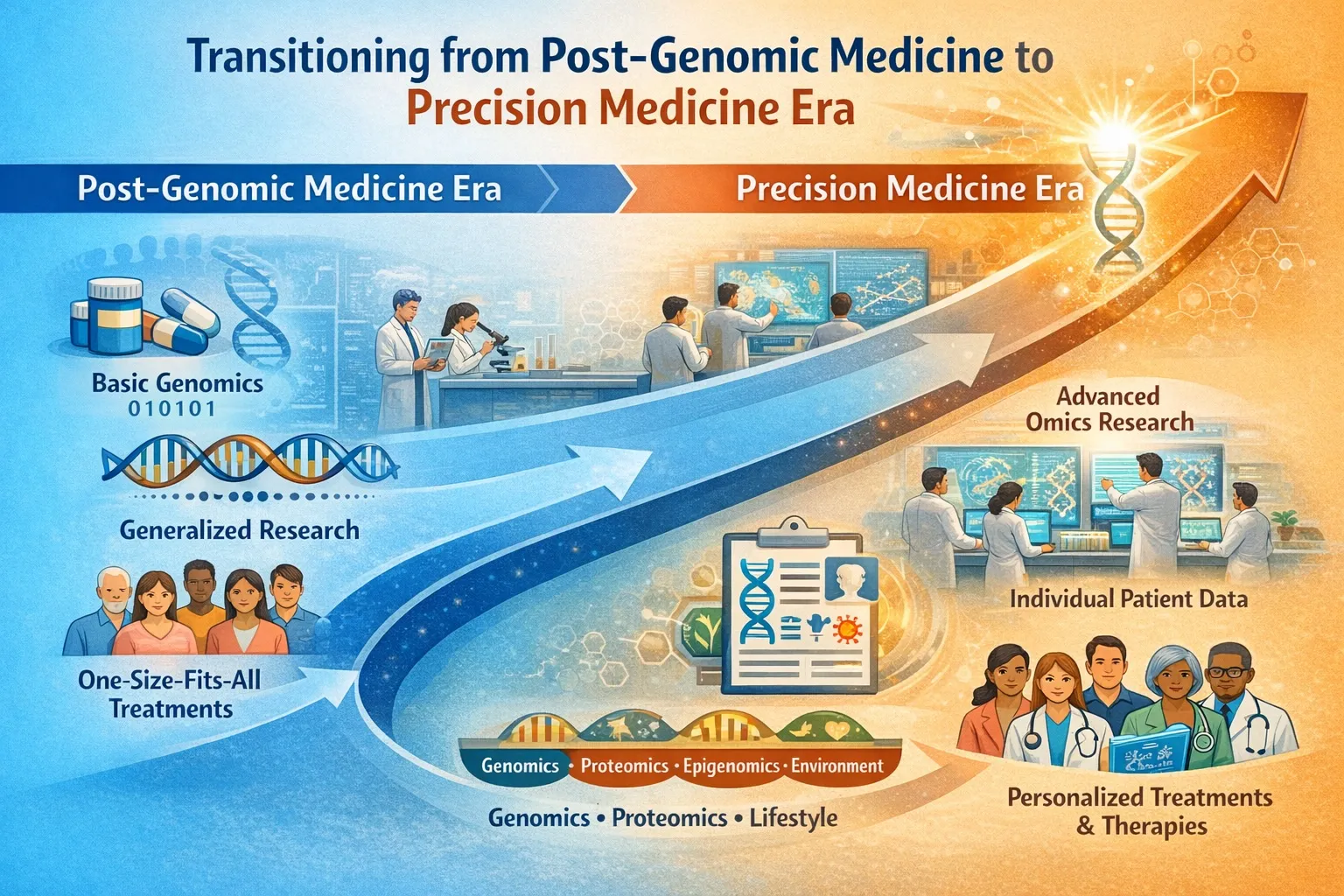
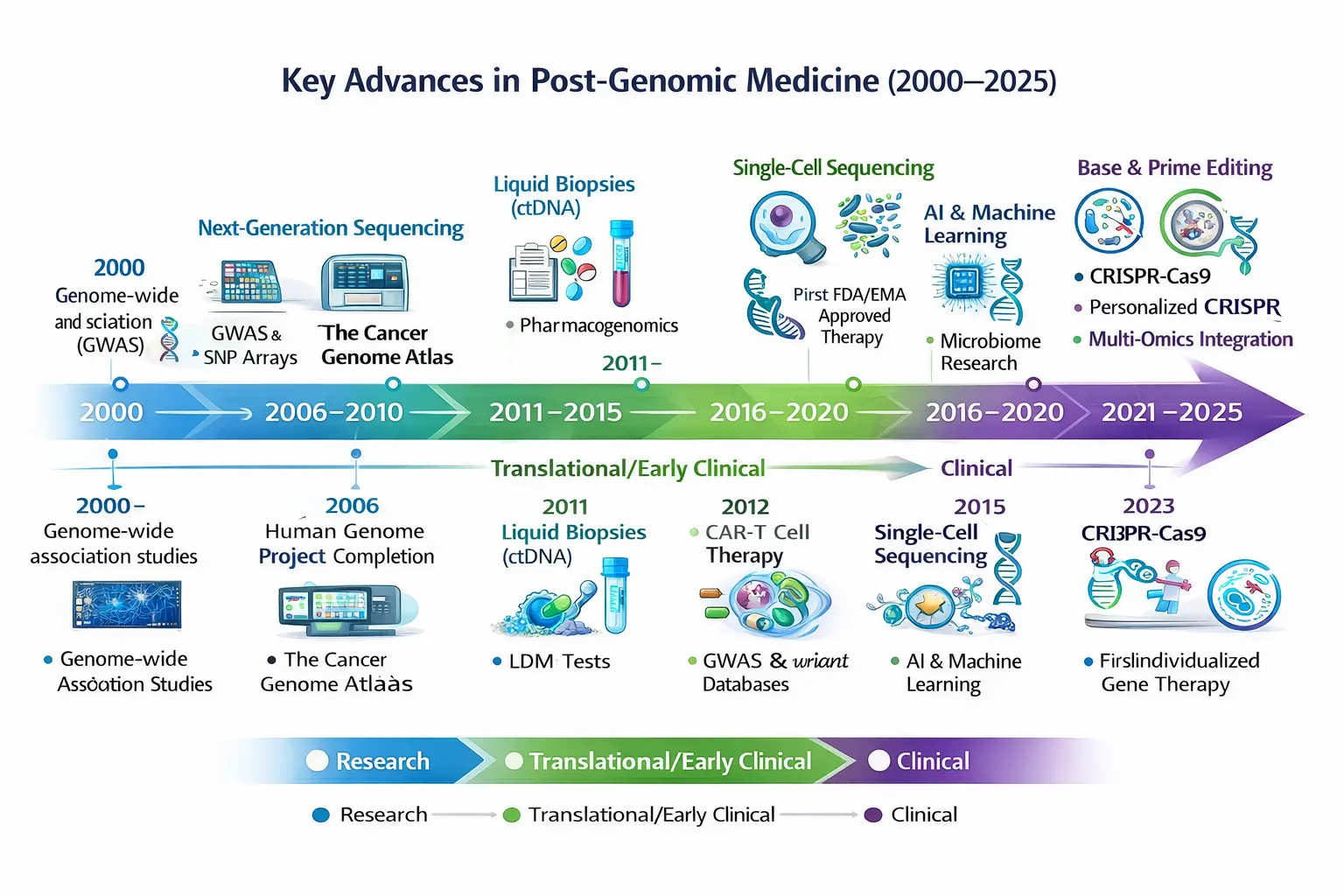
Here’s a chronological outline of the top 10 most significant developments in human genomics and post-genomic medicine over the last ~30 years, covering both foundational scientific breakthroughs and their clinical relevance. Each entry includes the approximate date, a brief description, key contributors/world efforts, and why it matters for medicine and public understanding.
1) Human Genome Project (1990–2003)
- Date: 1990–2003
- Description: The first large-scale, international collaborative effort to determine the complete human DNA sequence, producing a reference of ~3 billion base pairs and essentially launching modern genomics. ([Encyclopedia Britannica][1])
- Contributors: International Human Genome Sequencing Consortium (US NIH, Wellcome Sanger Institute, DOE, and centres worldwide). ([Encyclopedia Britannica][1])
- Clinical relevance: Created the foundation for identifying disease-related genes, enabled genetic testing, and catalysed genomic technologies that underpin personalised medicine. ([Encyclopedia Britannica][1])
2) High-Throughput Genotyping & Genome-Wide Association Studies (early 2000s)
- Date: ~2002–2005
- Description: Introduction of genome-wide genotyping arrays and the first genome-wide association studies (GWAS), mapping thousands of common genetic variants associated with complex diseases. ([PubMed][2])
- Contributors: International HapMap Consortium and early GWAS consortia. ([PubMed][2])
- Clinical relevance: Linked common genetic variants to risks for heart disease, diabetes, cancer, and other traits—pioneering risk prediction beyond rare disorders. ([PubMed][2])
3) Next-Generation Sequencing (NGS) Revolution (mid-2000s)
- Date: ~2005
- Description: Emergence of massively parallel “next-generation” sequencing technologies, dramatically increasing throughput and slashing costs compared with Sanger sequencing. ([ScienceDirect][3])
- Contributors: Margulies et al. (454), Illumina, ABI SOLiD platforms. ([ScienceDirect][3])
- Clinical relevance: Enabled whole-exome and whole-genome sequencing for routine diagnostic use, transforming rare disease diagnosis, cancer profiling, and pathogen genomics. ([ScienceDirect][3])
4) 1000 Genomes Project & Global Variation Maps (2008–2015)
- Date: 2008–2015
- Description: An international effort to catalogue human genetic variation across diverse populations at much finer resolution than HapMap. ([Wikipedia][4])
- Contributors: Broad consortium of genomics centres worldwide. ([Wikipedia][4])
- Clinical relevance: Provided essential population-level variation data used in variant interpretation, disease association studies, and precision medicine research. ([Wikipedia][4])
5) The Cancer Genome Atlas (TCGA) (2006–2014+)
- Date: 2006 onward
- Description: Large-scale sequencing and molecular characterisation of >30 cancer types, integrating mutations, copy changes, gene expression, and epigenetics. ([Wikipedia][5])
- Contributors: National Cancer Institute and NHGRI. ([Wikipedia][5])
- Clinical relevance: Established genomic landscapes of major cancers, guiding targeted therapies and biomarker discovery—core to precision oncology. ([Wikipedia][5])
6) UK 100,000 Genomes Project (2012–2018)
- Date: Announced 2012, completed 2018
- Description: First large national effort to integrate whole-genome sequencing with healthcare for rare disease and cancer diagnosis. ([Wikipedia][6])
- Contributors: Genomics England, NHS, public health partners. ([Wikipedia][6])
- Clinical relevance: Demonstrated real-world clinical value of genomic sequencing, returning diagnoses to families and embedding genomics into a national health system. ([Wikipedia][6])
7) $1 000 Genome & Mass-Market Sequencing Threshold (2010s)
- Date: ~2014
- Description: Sequencing cost dropped to ~US $1 000 per human genome, a symbolic threshold enabling much broader research and clinical use. ([Wikipedia][7])
- Contributors: Competition among sequencing platform developers (Illumina, Complete Genomics, etc.). ([Wikipedia][7])
- Clinical relevance: Made large-scale clinical and research sequencing financially feasible, accelerating adoption in medicine. ([Wikipedia][7])
8) Polygenic Risk Scores & Population Cohorts (2010s–2020s)
- Date: ~2018 onward
- Description: Development of polygenic risk scores (PRS) for complex diseases using large cohorts like UK Biobank and others, modelling aggregate genetic risk. ([GOV.UK][8])
- Contributors: Biobank programmes, academic statisticians. ([GOV.UK][8])
- Clinical relevance: Enables stratified risk prediction for common diseases (e.g., cardiovascular, cancer), underlying emerging precision prevention strategies. ([GOV.UK][8])
9) CRISPR-Cas9 Gene Editing and Therapeutics (2012–2020s)
- Date: 2012 discovery → clinical translation in late 2010s and 2020s
- Description: CRISPR-Cas9 genome editing revolutionised ability to precisely alter DNA; first therapeutic approvals of CRISPR-based treatments came in the early 2020s. ([Wikipedia][9])
- Contributors: Jennifer Doudna and Emmanuelle Charpentier (Nobel Prize, 2020) and many clinical research groups. ([Wikipedia][9])
- Clinical relevance: Gene editing now underpins curative approaches for monogenic diseases like sickle cell disease and β-thalassemia and is expanding into broader therapeutic areas. ([Prodshell Technology][10])
10) Complete Reference Human Genome & Pangenome (2022–2023)
- Date: 2022–2023
- Description: Completion of gapless human genome sequences and publication of a more diverse pangenome reference representing global ancestral diversity. ([Wikipedia][11])
- Contributors: Human Pangenome Reference Consortium and international consortia. ([Wikipedia][11])
- Clinical relevance: Improves variant calling and interpretation across ancestries, reducing reference bias and enabling more equitable genomic medicine. ([Wikipedia][11])
Why these matter to patients and practitioners
Across these milestones, genomics has evolved from a curiosity-driven scientific endeavour to a practical medical utility:
- Rare disease diagnostics: whole-exome/genome sequencing shortens diagnostic odysseys. ([ScienceDirect][3])
- Cancer care: genomic profiling informs targeted treatment. ([Wikipedia][5])
- Population risk prediction: polygenic scores and cohort data guide preventive strategies. ([GOV.UK][8])
- Therapeutics: gene editing and cell therapies offer curative pathways. ([Prodshell Technology][10])
- Global genomic resources: pangenomes and reference data improve interpretation across diverse populations. ([Wikipedia][11])
Resources
- Human Genome Project (HGP) | History, Timeline, & Facts | Britannica 🔗
- Genomic Medicine-Progress, Pitfalls, and Promise - PubMed 🔗
- Advances in clinical genetics and genomics - ScienceDirect 🔗
- 1000 Genomes Project 🔗
- The Cancer Genome Atlas 🔗
- 100,000 Genomes Project 🔗
- $1,000 genome 🔗
- Genome UK: 2022 to 2025 implementation plan for England - GOV.UK 🔗
- CRISPR - Cas9 🔗
- Genomics Revolution: Transforming Life Sciences Through Advanced Sequencing 🔗
- Human Pangenome Reference 🔗